Sunday, August 7, 2011

The Things Contest!

Editor's Note:  Eric Alberta, a member of our History Advisory Board and resident of Copake Falls, has worked for more than 30 years as an antiques appraiser with a particular specialty in antique toys and games.  Most recently, he catalogued the toy boat collection from the prestigious Forbes Gallery  in New York City for Sotheby's.  He can frequently be seen on Antiques Roadshow where he is often asked, "What's That Thing (worth!)?"

Welcome to The Things Contest! This is your chance to win a highly fashionable, soon to be collectible, Friends of Taconic State Park t-shirt.  Simply examine the photographs, “trove” the past, search your memory and report your findings! 

The first person to post the correct answers wins!

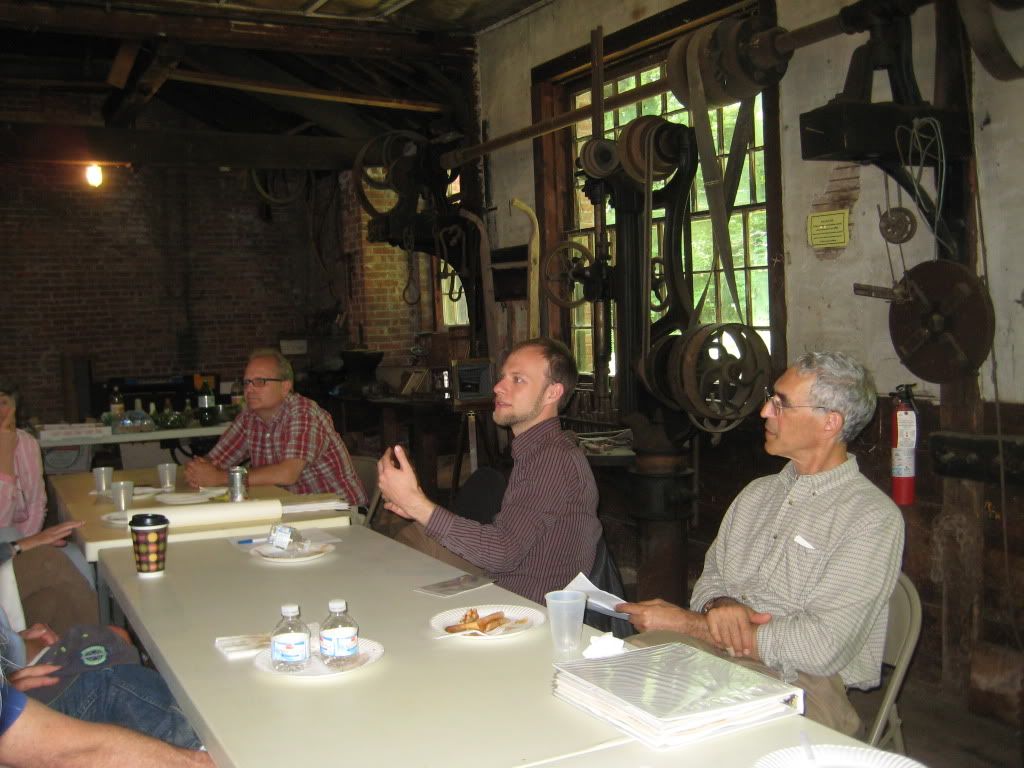
But first, a word about the inspiration for this contest. I am a proud member of Friends of the Taconic State Park and serve on the HistoryAdvisory Board.  At a recent meeting held at the Copake Iron Works Machine Shop, a room filled with  puzzling objects rich with the air of bygone eras, I was reminded of my own past.
I grew up in a rural area surrounded by relatives who were born at the end of the nineteenth or the beginning of the twentieth century.   I listened to their stories of ancient times with amazement and awe: kerosene lamps instead of electric bulbs, iceboxes instead of refrigerators, a world void of television, gas powered lawnmowers, and Polaroid film.  Perhaps because of this early education I developed a love of history and objects (Things!) that represent the past. By examining these objects we can get a glimpse of a vanished world and a deeper understanding of our own times. I hope this contest is fun for readers and will encourage you to look at everyday objects, learn what they are, and share your discoveries. I also hope that if you have items or stories associated with the Park and the Iron Works you will bring them to our attention (see below).

Clues have been woven into the introduction but here are a few more:
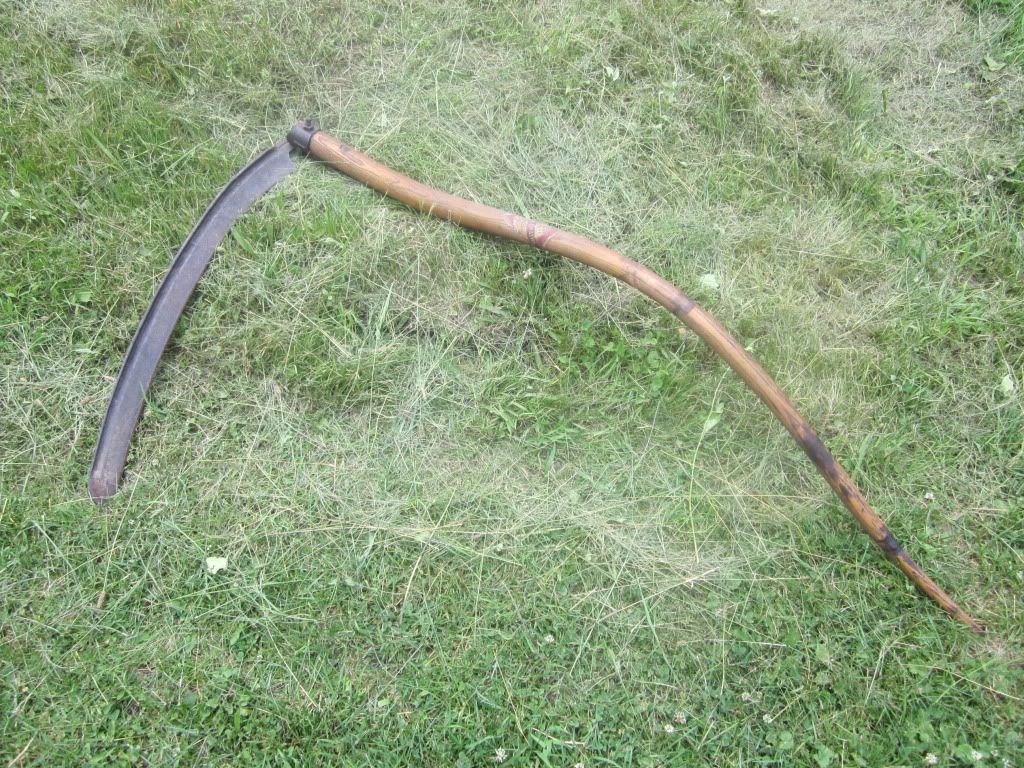
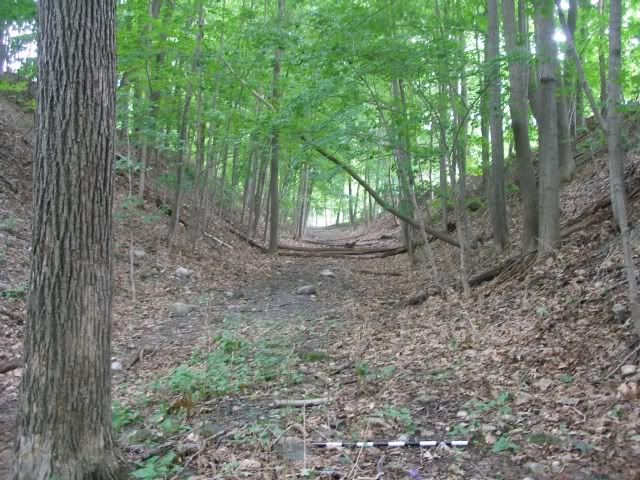
Photo 1 The Grim Reaper's Best Friend
Photo 1.  The photo’s background speaks to this Thing’s use. Bonus clue: This Thing is the Grim Reaper’s best friend.
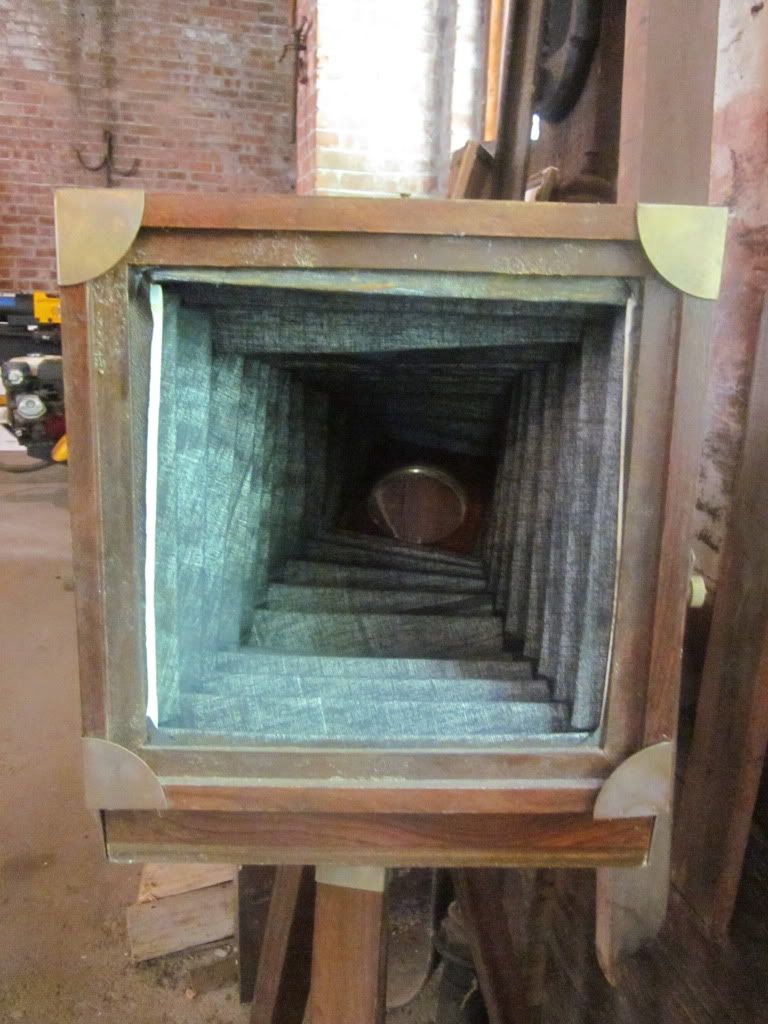
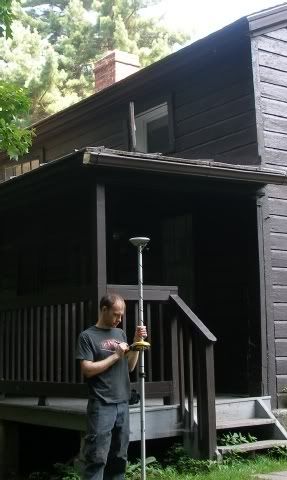
Photo 2 - A thousand words!
Photo 2. This Thing was capable of producing the equivalent of a thousand words.
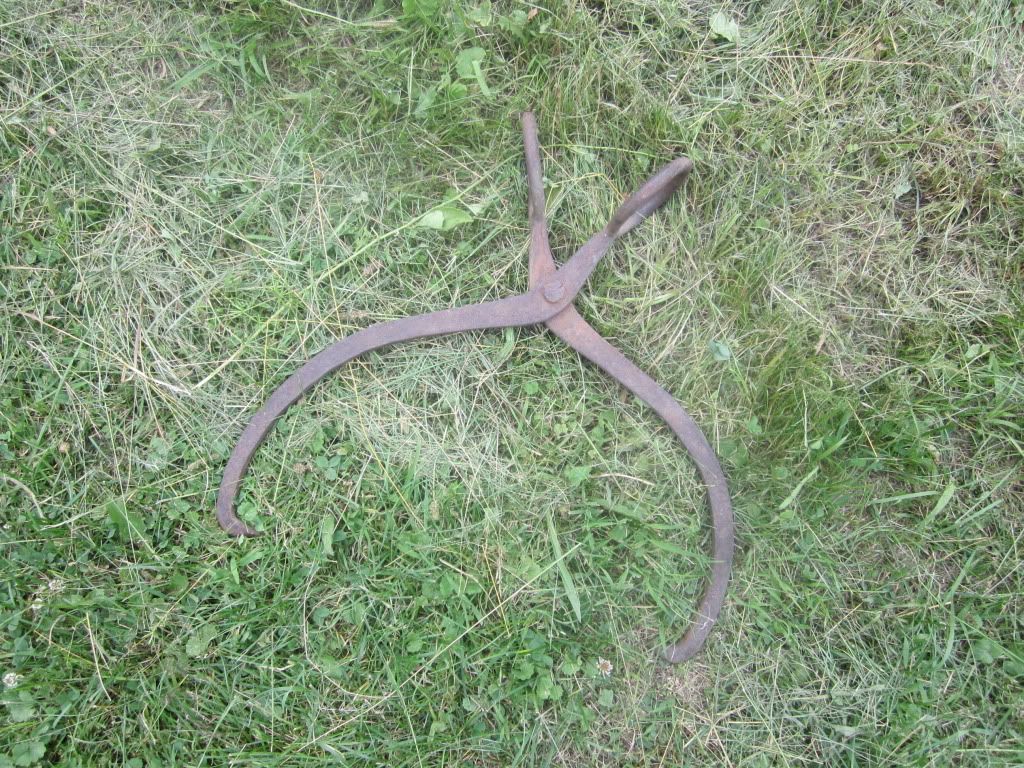
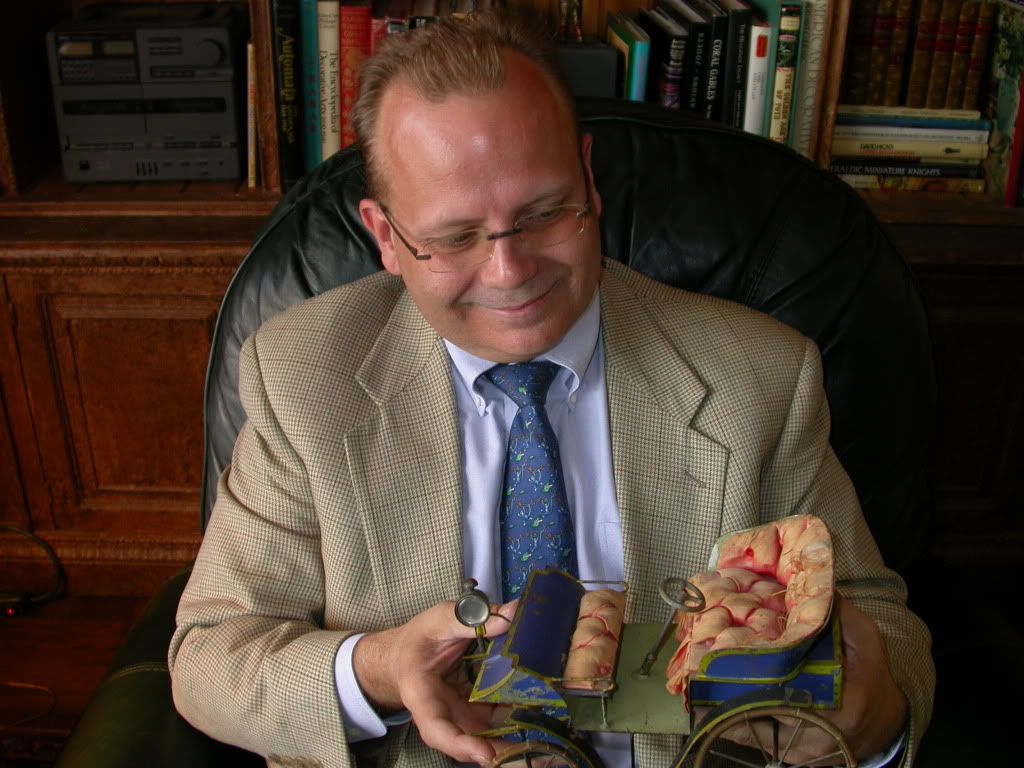
Photo 3 - Oh so cold!
Photo 3. If you think this Thing was used for logging you are very cold.

For the exciting conclusion to this contest including the answers and the name of the winner tune in next week to these pages.

But wait there’s more!  A Bonus Round! For a limited time only a second prize will be awarded to the person who writes the best description, provides historical information or anecdotes about the Park, delivers the most humorous answers or correctly corrects the author.  The bonus round prizewinner will be awarded a one-year Individual’s membership to Friends of the Taconic State Park. Since many of you are wisely already members, give the membership to a friend. In so doing your friend becomes a new Friend of the Friends of the Taconic State Park.

Report From the President


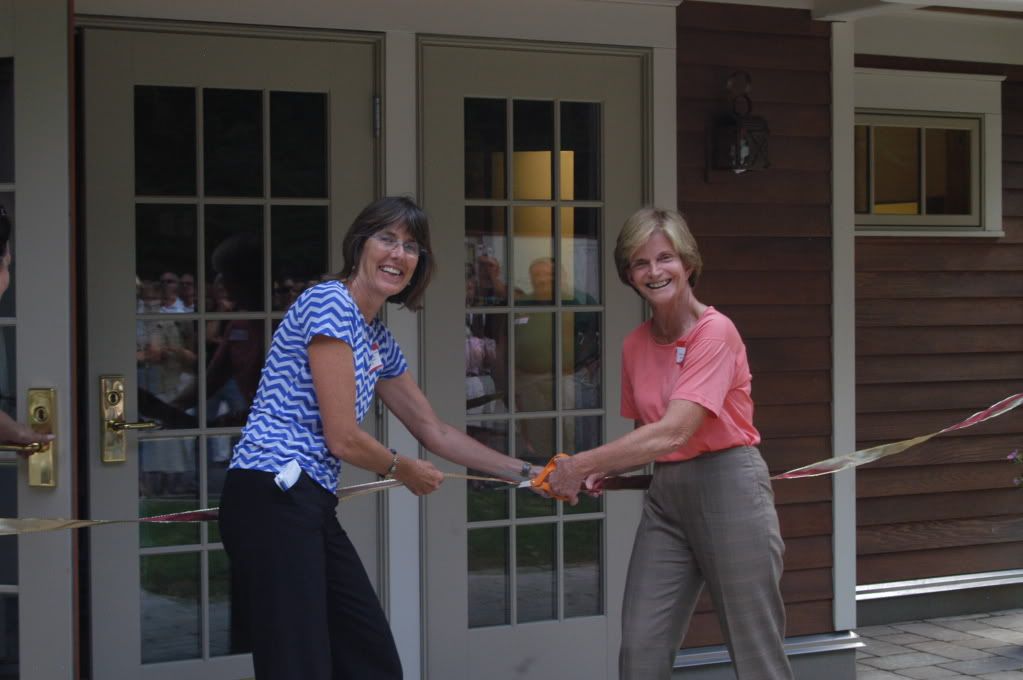
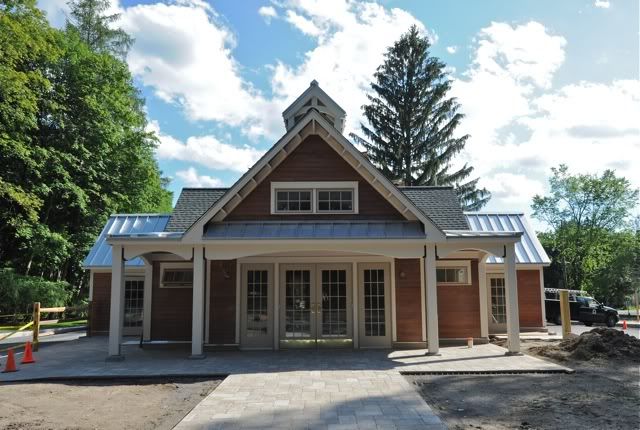
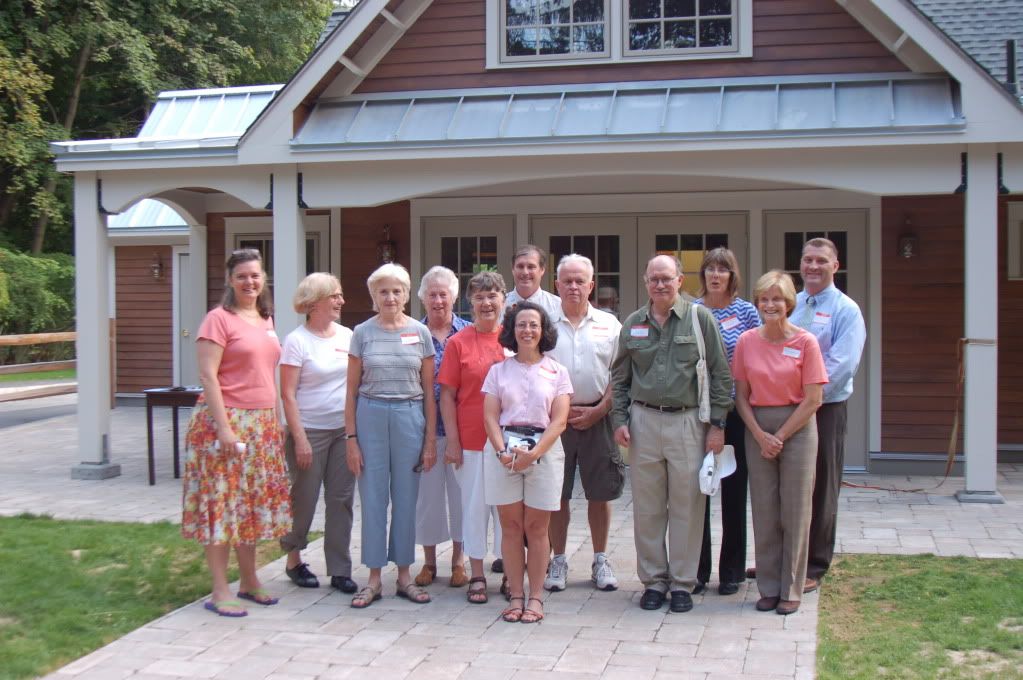
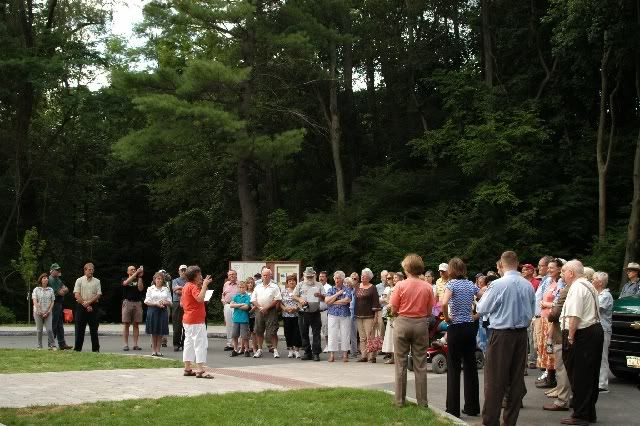
It was my great honor and pleasure to welcome a crowd of well-wishers on July 28th on the occasion of the dedication of the new Taconic State Park Visitor’s Center in Copake Falls during the Third Annual Meeting of Friends of Taconic State Park.  New York State Parks Commissioner Rose Harvey and New York State Council on Parks Chair Lucy R. Waletzky shared ribbon cutting duties with Leslie Wood, chairperson of  the Copake Economic Advisory Board.    Also present were Garrett Jobson and Ray Doherty from the Office of Parks’ Taconic Region.  Ray and Garrett thanked Dr. Waletzky for her generosity in making the new building possible, and unveiled a plaque dedicating a young sugar maple in her honor.  With the ringing of the old train bell, now mounted on the roof, the building doors were open for the public’s inspection and tour.
 
Margaret Roach
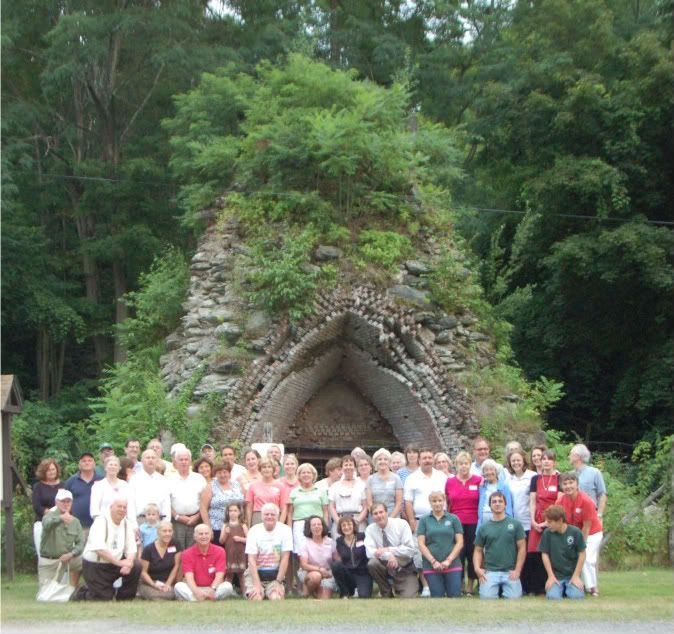
The guests then walked over to the Copake Iron Works for the business portion of the Annual Meeting as well as a delicious pot luck picnic.  At the meeting officers were elected for the coming year, and the by-laws were amended to allow for the expansion of the Board of Directors to eleven members.  New board members are Brian Boom and Louise Peterson, both long-time residents of Copake Falls and devoted friends of the Park.  Treasurer Deborah Cohen reported that we have raised $105,00 of the $147,000 needed to construct the protective cover over the old furnace, and Edgar Masters gave a brief report on the progress of the engineering status of the cover,  saying that he is hopeful that the footings for the uprights can be dug in the near future. Margaret Roach, who could be found flipping burgers and hot dogs for the assembled, was thanked for all her efforts on our behalf.  She will be presenting her popular slide lecture, “Nonstop Plants: The 365 Day Garden,” as a benefit for us on Saturday, August 20th (which also happens to be Copake Falls Day). 

The Friends group is thriving, with about  190 current members.  New members continue to join.  We encourage all of you “established” members to renew your membership.  Your continued support will make possible the restoration of the Copake Iron Works Historic District, an exciting restoration plan that will create economic, recreational and cultural benefits for all of us: neighbors and visitors, young and old, athletes and historians. 

With deepest gratitude for your interest and support,

Milbrey Zelley, President
Friends of Taconic State Park
Friends of Taconic State Park - July 28, 2011

Sunday, March 6, 2011

Church of St. John in the Wilderness


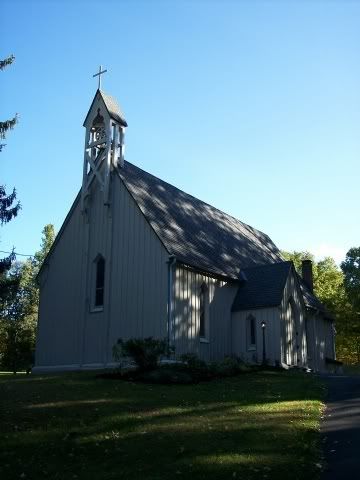
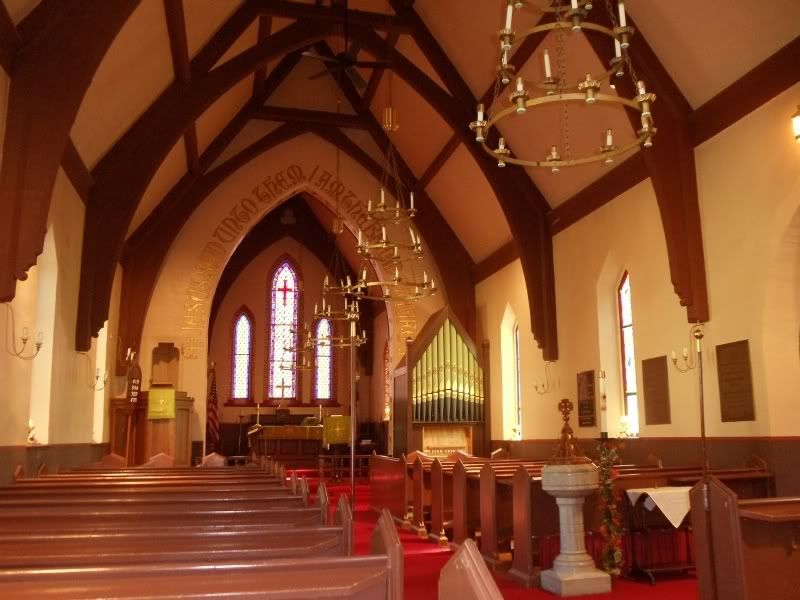
The Church of St. John in the Wilderness was built by the owners of the Copake Iron Works during the first years of the Works' operation. Lemuel Pomeroy and his sons began their blast furnace operation in Copake Falls in 1845. In 1851 the Pomeroys and Isaac Chesbrough raised funds to build an Episcopal Church on lands donated by the Copake Iron Works Company.


The wood frame, board-and-batten church was designed by Richard Upjohn (1802-1878), an English-born architect who is best known for his many Gothic Revival churches including Trinity Church on Wall Street in Manhattan. Upjohn was also a leader in developing the profession of architecture in the United States, serving nineteen years (1857-1876) as the founding president of the American Institute of Architects.

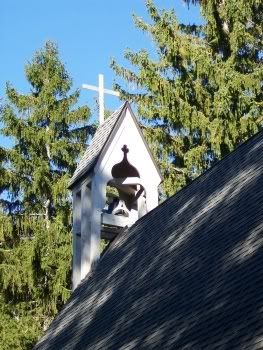
Completed in 1852, the church has a simple nave, an articulated chancel, an entry porch and roof-top bell tower, all executed in wood. The roof is carried on simple interior timber arch struts which curve gently upward. Behind the chancel is a triplet of stained glass lancet windows. The simple interior includes church furniture designed by Upjohn.

The church's design reflects principles of the high church movement of American Episcopalians in which Upjohn played an important part.

Architectural historian William H. Pierson, Jr., (1911-2008) of Williams College called St. John in the Wilderness "a masterpiece of distilled grace" and "elegant in proportion and infinitely refined in scale." He called special attention to the bell tower, calling it "among the most subtly composed to be found in the small Gothic Revival churches of America." The importance of St. John in the Wilderness was recognized 1995 when the Church was placed on the National Register of Historic Places for its architectural significance. 


In 2007 the church was again included on the National Register, this time as a part of the Copake Iron Works Historic District which recognizes the area's historical and industrial significance.


Editor's Note: Dale Petersen, AIA, a member of The Friends of Taconic State Park History Advisory Board, is an architect with the New York City Department of Design and Construction. He and his wife Louise, also a member of the History Advisory Board, have owned a home in Copake Falls for twenty five years. He has a special interest in the hamlet's historic structures.

Friday, November 5, 2010

The Historic Railroads of Taconic State Park By Frederick Sutherland


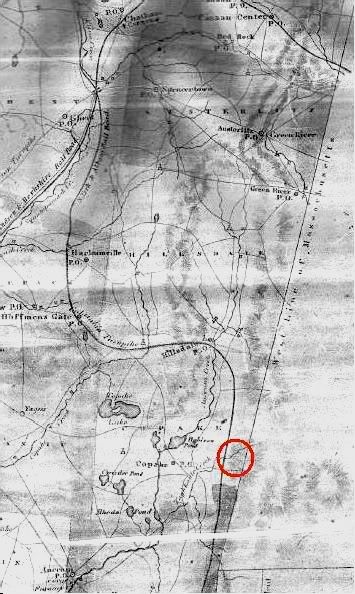
Copake trainTrains ran through the heart of Taconic State Park over 150 years ago. Back then, the Copake Iron Works owned a portion of the land the park now controls. The first owner of the Copake Iron Works, Lemuel Pomeroy, had selected the site in 1845 because it fulfilled three basic requirements for a successful iron works. The site had good quality ore, running water (Bash Bish Brook) to power the equipment, and plenty of timber nearby to burn as charcoal for the furnace. Another reason for building an iron works here is that Pomeroy probably knew where the local railroad would be built. This railroad track, now the Harlem Valley Rail Trail, connected the Iron Works to New York City in 1852. The prospective rail line is clearly depicted on county maps (Figure 1) as early as 1839 and is located almost exactly where it would be constructed 13 years later. The direct connection allowed the Iron Works to receive the raw materials it needed for production more easily and to transport finished iron products more quickly and inexpensively than by the Hudson River.

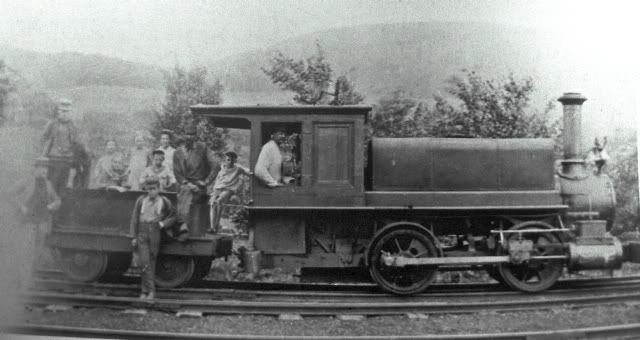
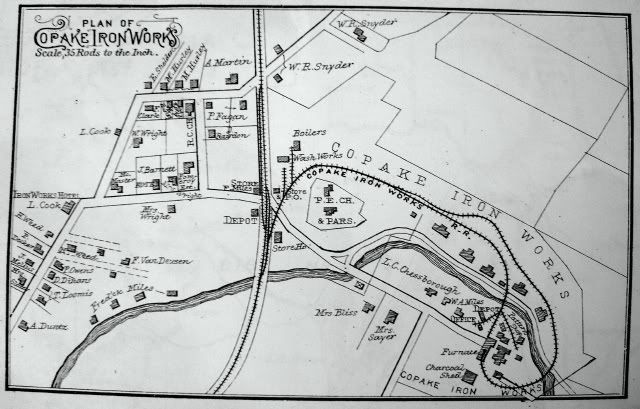
After Frederick Miles, the new owner of Copake Iron Works, took over in 1862, a narrow gauge railroad line was installed on the property to help move goods to and from the furnace (Figure 2). This railroad line appears in the 1888 Columbia County Atlas (Figure 3). The tracks ran between some of the workers homes. Just imagine all the noise and soot resulting from a locomotive going by these houses! The narrow gauge loop transported raw materials like iron ore from the mines just west of the furnace, now the Ore Pit Pond, to the furnace. The locomotive also transported completed cast-iron goods to Copake Station (a rail depot) for wider distribution and disposed of waste products, like slag.

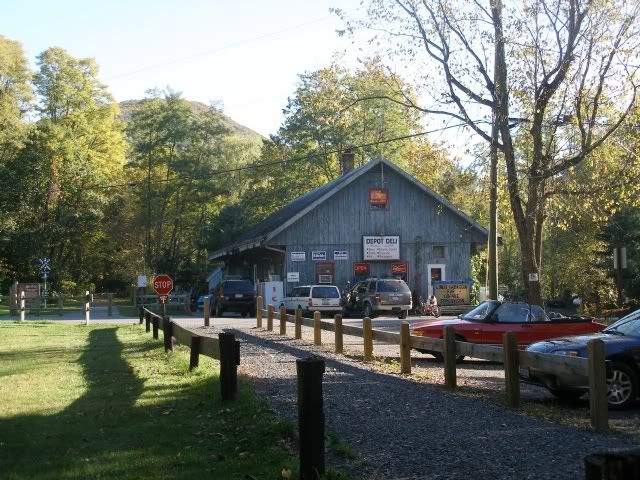
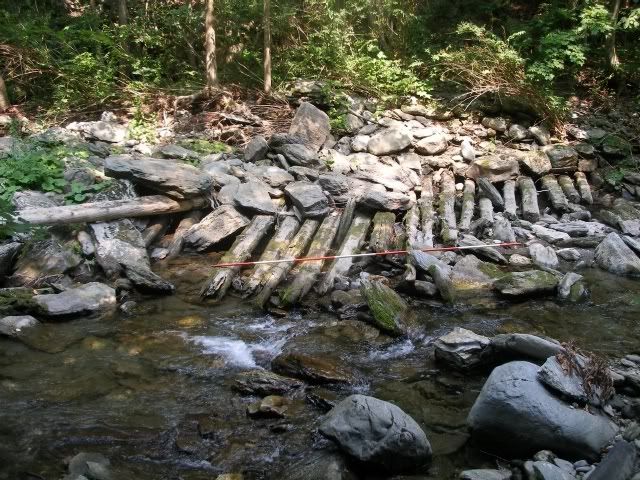
Today much of this railroad system is still visible in and around the Park. The Depot Deli, beside the Harlem Valley Rail Trail and the Taconic State Park entrance, was a railroad depot for the Copake Iron Works (Figure 4). A cut in the hillside just north of Saint John in the Wilderness Church allowed the narrow gauge track to pass through on its way to the furnace (Figure 5). Part of the bridge deck, where the train crossed Bash Bish Brook, is located on the streambed just east of the furnace area (Figure 6). Several tall stone retaining walls supported the bridge along the southern shore of this area as well.

I encourage all of you to explore your local archives at the Columbia County Historical Society, the Roeliff Jansen Historical Society, and the Hillsdale Public Library to see many more maps and historic pictures of the trains and tracks that ran through this region. If you wish to explore the remains of the tracks in the park please be careful, as some areas can be very steep and slippery. Taconic State Park staff may be able to provide you with a copy of the 1888 Atlas map to help you retrace where the tracks once ran inside the park. The legacy of railroads at Taconic State Park is an important aspect of our regional heritage that we can experience even today through the remains that surround us while visiting the Park.

Fred Sutherland
Editor's Note:  Frederick Sutherland is a doctoral candidate in Industrial Archaelogy and Heritage Management at Michigan Technological University, the pre-eminent institution for the study of that topic.  Fred is a member of our History Adbisory Board and the author of  "From Forest, to Company Town, and Back Again: Survey and History of the Copake Iron Works."