Saturday, February 9, 2013

President’s Letter– 2012 in Review

 
Mibs head shot
Mibs Zelley
Editor’s Note:  In her review of 2012, Board President Milbrey “Mibs” Zelley reports to you on our progress during the past year and our plans for this coming year.  We are grateful for her guidance and enthusiasm which have helped us achieve so much, especially this past year.


February 2013

Dear Friends, Neighbors and Loyal Supporters,

This past year was eventful and event-filled for Friends of Taconic State Park.
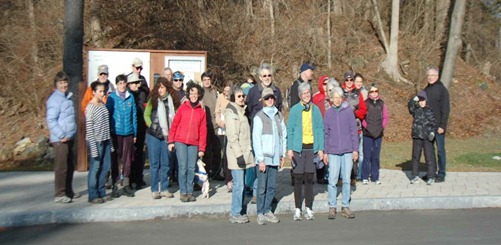
FirstDayHikeQuinbycropped
First Day Hike 2012
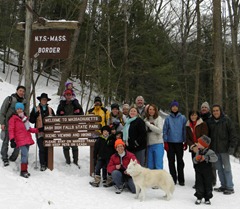
We hosted garden lectures by Page Dickey and Ken Druse, and offered numerous hikes in and around the park including our first First Day Hike with Founding Board President Jane Peck, a Hidden Valley Ramble in connection with the Hudson River Valley Ramble, tree lover hikes with board member and #1 tree guy Jim Mackin and an invigorating hike with Claudia Farb from Sunset Rock to Catamount.
Hidden Valley Ramble Group Photo
Hidden Valley Ramble - Sept. 2012
Jim Mackin
Tree Hikes with Jim Mackin
  
First Day Hike 2013 at the state line cropped
First Day Hike 2013
SoupMeister
Soup for Everyone!
In June we hosted our first Pomeroy Party, celebrating our re-connection with the descendants of Lemuel Pomeroy, the founder of the Copake Iron Works.  Our participation was an important part of the Fifth Copake Falls Day, with informative tours of the historic Copake Iron Works led by History Advisory Board member Victor Rolando and Jim Mackin. We were also a popular participant in the first ever Copake Falls Winter Walk, offering homemade butternut squash soup and home baked popovers at the Iron Works.

IMG_2392
Furnace Cover- Finished!
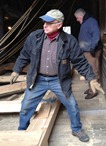
Our major accomplishment, however, was the completion of the protective cover for the historic Copake Iron Works blast furnace. Ground was broken in the fall of 2011 when the four concrete footings were poured. During the ensuing winter months, the massive legs and cross beams were constructed off site by an able and devoted construction crew. Edgar Masters masterminded the project and contributed the expert labor of his employees Jim Conklin, and Tom Flaherty. Indispensable volunteer Bob Callahan worked tirelessly alongside Jim, Tom and Edgar.


Edgar Masters and Don Oestrander plan the move
Edgar Masters & Don Oestrander
Men at Work
Bob Callahan &Tom Flaherty
Tom and Bob
Tom &Bob


 In early spring and summer of 2012, the huge components were trucked to the site by equipment and drivers provided by Ed Herrington, Inc.
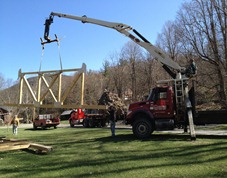
Delivery at the Iron Works IMG0435
Herrington's Moves Mountains...
IMG_0415
...and 50', 3 ton furnace cover pieces too.
   
IMG_2298
Lawrence D. Coon & Sons - many cranes make light work Aug. and Oct. 2012
Once the pieces were at the site, Lawrence D. Coon & Sons – the barn building firm of record in Columbia County - assembled the pieces, and with their four giant cranes carefully lifted and dropped them into place on the footings.
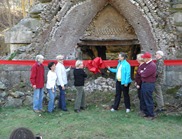
Ribbon Cutting Photo by Karen Melanson
Furnace Fest November 2012
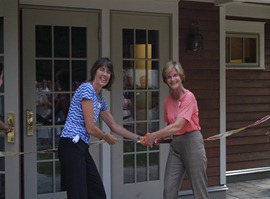
Day by day, we saw our vision become a reality, and in November, at Furnace Fest, the big red ribbon was cut…project completed!
Now, the massive cover, which is the same height and shape as the original building, draws attention to all passing by on both Route 344, as well as Valley View Road!


IMG_2293
Tim Schroder

Grateful thanks to so many people for making this possible: to Ann and Doug Clark and Tim Schroder of Clark Engineering & Surveying, P.C. for their extraordinary pro bono contribution of time and talent.  To Don Oestrander, Mike Wheeler, Pete Stalker, and Richard and Ed Herrington of Ed Herrington, Inc. for numerous trips up and down High Valley Road in flatbed trucks; to the Hudson River Bank & Trust Company Foundation, the Rheinstrom Hill Community Foundation, the Society for Industrial Archaeology, and to the New York State Environmental Protection Fund for leadership grants awarded to this project; and to our many generous individual donors, both nearby and far away, whose willingness to give of their treasure helped make the project a reality.
DSC_0048
Margaret Roach

DSC_0033
Ray Doherty

Ribbon cutting Commissioner and NYS Chair Kristen
Rose Harvey and Lucy Waletzky

We  extend deepest thanks to Lucy D. Waletzky, Chair of the New York State Council on Parks and Rose Harvey, Commissioner of New York State Parks, whose enthusiasm for our work helped draw attention to our project from throughout the state; to Ray Doherty, former Taconic State Park manager and now general manager of the Taconic Region, whose early support made our work possible, to our neighbor Margaret Roach for her abiding support of and commitment to our efforts; and to the entire Board of Directors who worked tirelessly to bring the project to completion.
Board of Directors Friends of Taconic State Park July 2011
Board of Directors 2011/2012
IMG_0308
Edgar M. Masters

Last, but certainly not least, it was the can-do man with the vision, Edgar M. Masters, who imagined that such a project was possible and whose drive and energy throughout the long construction process brought the dream to reality!
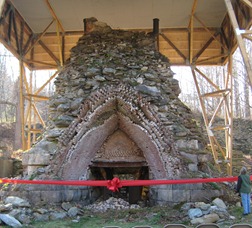
IMG_2393Now to the future! First of all, we must stabilize the furnace itself. Long years of exposure to the wind, rain and snow, as well as the ravages of weeds and scavengers, have severely weakened the four arches of the furnace, as well as its interior. Unless we want our beautiful cover to be covering nothing but a pile of rubble, the work of stabilization must begin immediately. We have already begun to raise funds for this work, and will be actively seeking additional support to realize this goal by the end of the year.
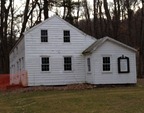
LinkHouseFeb2012Remedial work is also desperately needed at two other important historic buildings at the site: both the machine/pattern shop, and the worker's cottage called the Link House must be stabilized. We cannot allow these buildings, which tell such an important part of the story of the Copake Iron Works, to deteriorate further.

Fish Pond Trail We also plan to complete a trail connecting the Copake Iron Works to the Bash Bish Falls along the south side of the Bash Bish Stream in early spring. The Fish Pond Trail will pass by a reconstruction of a charcoal hearth and the holding ponds which once supplied the water for the early water wheel, the first power source for the bellows which kept the furnace in blast. We hope that the completion of this trail will bring the many annual visitors to the Bash Bish Falls back to the Copake Iron Works and will provide an interesting additional piece to the story of the iron industry at Copake Falls.

Snowshoeing with Zena in Taconic State ParkWe will also be continuing our programs of lectures, and trail and nature hikes throughout 2013 beginning with our annual President’s Day “Snow or No” snowshoeing event on Monday, February 18th.


KenGreen.jpgOur third annual Welcome Spring event on March 23rd will feature a presentation by Ken Greene of the renowned Hudson Valley Seed Library; on April 20th, Brian Boom of the New York Botanical Garden (and an FTSP board member) will present ,"Earth Day Reflections on the Environment in Cuba," on May 11th, celebrated plantsman Lee Reich will present “Backyard Fruit Simplified,” and on June 8th, noted botanist Robert Naczi of the New York Botanical Garden will lead a wildflower walk in the park. Our contribution to Copake Falls Day, this year on August 17th, will include (and feature!) The Fabulous Beekman Boys – more to come on that event.

Our complete calendar is on our website with timely updates on our Facebook page.  The latter has become an essential resource for us.  We urge you to follow us there.
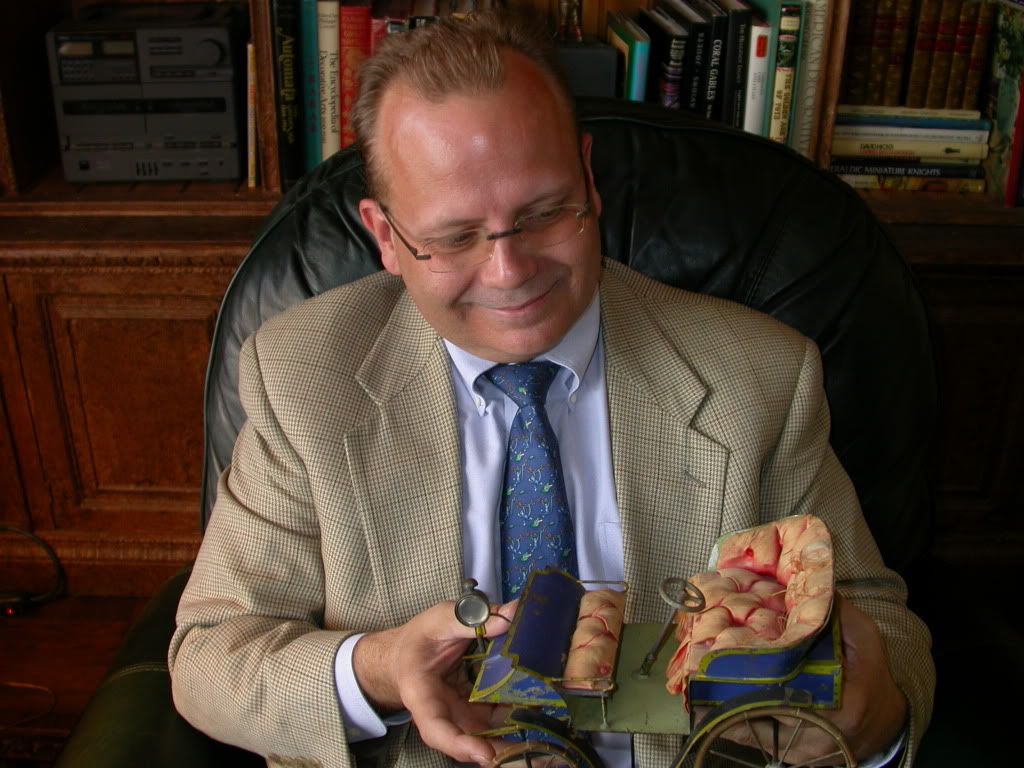
cart phot with detail from Gobrecht disk

And finally, we are delighted to be collaborating with our neighbors in Mount Washington (MA) who are creating a museum exhibit on the history of charcoal making in the 19th century. Their work will be exhibited at the Ironworks museum this summer.  More details on our website and via Facebook as they become available.

To keep abreast of our activities, please follow us on Facebook and check our website. Please also mark your calendar now for the Fifth Potluck Supper and Annual Meeting of Friends of Taconic State Park on July 25th.

But most important of all, please join or renew your membership in Friends of Taconic State Park. Your support is so essential in making our beautiful park an exciting place to visit.

Thank you!

Sincerely,
Milbrey Zelley, President
Friends of Taconic State Park


Wednesday, January 16, 2013

Furnace Cover Campaign Launch–October 2010


WintAldrichEditor’s Note:  Friends of Taconic State Park launched its furnace cover campaign in October 2010 at a gathering of neighbors, friends and other supporters concerned about the preservation of the historic Copake blast furnace.   J. Winthrop Aldrich, retired New York State Deputy Commissioner for Historic Preservation, was the keynote speaker at that event.  We are proud to have completed both the fundraising campaign and the construction project on time, thanks in part to his inspirational remarks which follow.
Friends of the Taconic State Park October 23, 2010
I’m delighted to be back at this wonderful park which, as you know, is one of the original State Parks in the Taconic Region, dating back to 1928. It marvelously combines all three elements that are proclaimed in the agency’s name: parks, recreation and historic preservation. To put it another way, you could adopt as the Friends’ motto one that I heard the other day on the radio: “history is in our nature.”
And indeed it is – for it was nature in the form of iron ore, water power and firewood that made the industrial history of this place, and it is nature in a much more nurturing manner that has been making it a beloved site of public recreation for campers, hikers and swimmers for over 80 years. This then-and-now, bifocal, history of Copake Falls and of the environs of romantic Bash Bish summons up the image beloved of students of American history: the “machine in the garden.”
I must tell you that personally I love this sort of synergy. For over 35 years, first at the Environmental Conservation Department and then at State Parks, I have espoused the convergence of culture and nature as one unified precious environment demanding our protection and enjoyment. It seems to me that you as a Friends group are very much on this same mission.
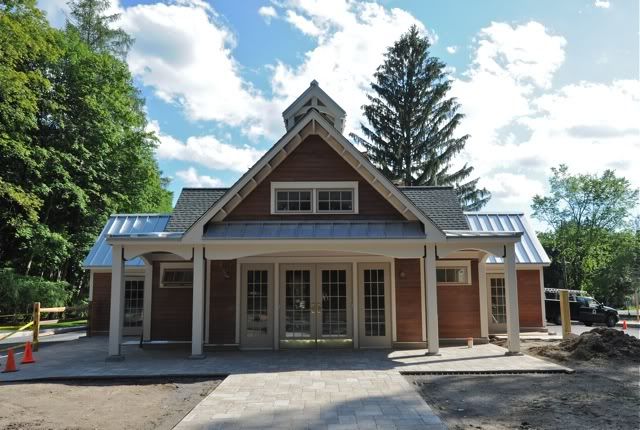
Even in these tough economic times the stewards of this park do a terrific job and I am happy to add my word of praise for all that Ray has done to foster Taconic State Park, to your good fortune (he is now promoted to Region-wide responsibilities but continues here as well); Garrett Jobson, who has efficiently advanced the plans for the splendid new building at the Ore Pit swimming area, and who also has now been given larger responsibilities; and it is great to see a Commission member here, Art Gellert, and a soon-to-be Commission member, carrying on a grand family tradition, your own Edgar Masters.
But these ARE tough times, and the stabilization plans for the historic furnace that Larry Gobrecht, Tom Schofield and others developed years ago have languished. They languish no longer! It is truly wonderful news that this iconic structure from the 1870’s will be getting a sheltering cover that will greatly slow its deterioration and assist in telling the story of industry in this place.
Make no mistake – it is an important story: the iron industry hereabouts was one of the earliest extractive and manufacturing enterprises in the country, dating back to the mid-18th century and Philip Livingston, Second Lord of the Manor. But what arose at Copake Falls in the 1840’s was a sophisticated, well-financed, state-of-the-art business that took advantage of the railroad and created what was a company town. A glance at the published maps or at the diorama leads us to explore for the remnants underfoot (such as the old narrow-gauge railbed) or in plain sight (Upjohn’s lovely Episcopal chapel). The remnants are here. Industrial archaeology is increasingly championed as an important element in our American heritage.
Here we are within the Hudson River Valley National Heritage Area, which celebrates the region as a “corridor of commerce” among other signal attributes. Yet we can point to remarkably few actively promoted, publicly accessible heritage sites associated with industry and commerce. You have one of the few right here, listed on the National Register of Historic Places in 2007, and the Greenway folks should be promoting it along with your efforts and those of State Parks.
Another nice then-and-now link is the fact that an important product of the company was iron ploughshares, many of which were put to work on neighboring lands such as the still-operating Langdonhurst Farms in this breadbasket valley now vitalized by C.S.A.s.
Fifty years ago Freeman Tilden came up with a credo that I think applies beautifully here at this park and this heritage site:
Through interpretation comes understanding;
Through understanding comes appreciation;
Through appreciation comes protection.
Viable iron mining and manufacturing may have departed our region for the Mesabi Range in Minnesota and elsewhere in the 1890’s, but we must nevertheless understand, appreciate and protect what remains from this heritage. Emphatically that is what this exciting project is about.
I am deeply impressed that a third of the estimated $150,000 cost is already committed as in-kind services – skilled labor, materials, use of equipment. This project is doable, and it is really important that it be done. I congratulate the Friends’ board, members and advisory committee on all that they have already achieved, and for receiving the 2010 Heritage Award from the Columbia County Historical Society for your commitment to this industrial heritage.
I relish the notion of families coming to camp, swim and hike in these beloved lands, and returning home with their imagination enhanced by visions of man’s long-ago very different use of these same resources. It is from such a bifocal vision that a true understanding and appreciation of nature and culture will emerge.
Our parks and historic sites have never needed their friends more surely than they do today in in this bleak and problematic political and fiscal climate. We must all be grateful that your Friends group is on the job. I wish you all success in this grand endeavor!
J. Winthrop Aldrich
(retired as New York State Deputy Commissioner for Historic Preservation on October 1, 2010)


Monday, January 7, 2013

How Much Does a Ton of Iron Weigh? by Victor Rolando


Editor's Note:  One of of our favorite "Ironmasters" is good friend Victor Rolando whose love of all things related to industrial archeology is an inspiration to the leadership of Friends of Taconic State Park in their work preserving the Copake Iron Works.  In this fascinating article, Vic asks the time honored question...

How much does a ton of iron weigh? (or, “Let the researcher Beware!”)
                                                                 by Victor R. Rolando

Vic Rolando, Friend to Troubled Furnaces Everywhere!
   One of the problems in attempting to compare the tons of iron made by 19th-century blast furnaces are the various definitions of a “ton.” There was, for example, an English long ton, which weighed 2,240 pounds (also called a “gross ton”) and contained 20 hundred-weights (cwt) of 112 pounds (lbs) each. Although called a “hundred-weight,” it weighed 112 lbs so it could be evenly divided into halves, quarters, and eights (an eighth of a cwt is 14 lbs, called a “stone”). This weight system carried over to Colonial America and continued in use for the iron industry well into the early to mid-1800s. After the American Revolutionary War, the 112-lb cwt was dropped in favor of a 100-lb hundredweight, which translates into a 2,000-lb ton, avoirdupois (advp), also known as the short ton (some in Britain call the US hundredweight a “cental”).
   It’s not unusual to see tonnages of early blast furnaces listed in 19th-century hand-written ledgers as, for example: 2T, 14Cwt, 2Q, 18 lbs, or simply “2.14.2.18” (4,000  + 1,400  + 50 + 18 lbs) which totals 5,468 lbs or 2.734 short tons. Although the US and Europe adopted various “weights & measures standards” by the 1860s, many local industries that did little or no interstate or foreign trade maintained their own archaic bookkeeping systems. By the late 1800s the European iron industry was using a “centner” as the common unit of pig iron measure, in which 1 centner = 110.23 lbs, or exactly 5% of a metric ton that equals 1,000 kilograms (kg) or 2,204.6 lbs advp. The metric ton is used in today’s commodities market for iron and steel.

   History books abound with tonnages of various commodities without identifying which tonnage systems they refer to. Even books relating specifically to the iron industry rarely make the distinction. And although most iron researchers realize that the long ton has long been the rule for the iron industry, paragraphs dealing with tons of iron, ore, charcoal, blasting powder, lumber, and molding sand beg the question whether the actual weights of all those items are based on 2,000-lb, 2,204.6-lb, or 2,240-lb tons. By reading closely how some tonnages are described in terms of value per ton and total values, whether they are short or long tons can sometimes be estimated, at best. Using this scrutiny of data, one 1966 history of the early iron industry in downstate New York was found to quote furnace outputs in terms of short tons. On the other hand, a 1911 survey of Maryland ironworks was found to define outputs in long tons. If one is unaware of these differences, direct comparisons of pig iron production and furnace efficiency could be difficult at the least, or completely erroneous at worst. 

   For example: of the various historical accounts of how much iron was made at the Copake blast furnace, the only two reliable detailed 19th-century accounts come from reports by William G. Neilson (1842-1906) and J.P. Lesley (1819-1903).
   In Neilson’s report on the charcoal iron industry in New England, compiled for the American Iron and Steel Association in 1866, he stated that the furnace “at Copake Station” made “about 2800 tons (gross)” in 1865.  His tables of various furnace specifications elsewhere in the report indicate the furnace made from 1743 tons in 1854, 505 tons in 1855, and 1513 tons in 1856 (among tonnages up to 3387 tons in 1866 with none made from 1857 through 1860). To his credit, his tables also identify tonnages listed at 2,000 lbs, so then why did he write “about 2800 tons (gross)” above, possibly inferring short tons?
   Lesley, an earlier chronicler of the US iron industry and Secretary to the America Iron Association in 1857, reported iron production at Copake at 160 tons “more or less” for each of 1854, 1855, and 1856 without identifying whether long or short tons. But in his 1859 report he stated that 1,556½ tons were made during 41 weeks in 1854; 451 tons during 14 weeks in 1855, and 1,350½ tons during 38 weeks in 1856. Analyzing the weekly output one finds the 3-year average is 35¼ tons/week, or essentially 5 tons a day within a very acceptable +7.7% to -8.5% variance, indicating an unexpectedly consistent level of production – “unexpectedly” given the number of things that could go wrong in a mid-19th-century blast furnace operation. But attempting to apply this interesting piece of data is complicated by neither of Lesley’s 1857 nor 1859 publications identify whether his numbers reflect long or short tons. Although most of Lesley’s tonnages are smaller than Neilson’s, Lesley’s probably being long tons, unfortunately not nearly enough of Lesley’s tonnages convert very close to Neilson’s short tons. So whose are the more accurate figures?
   Starting in 1873, The American Iron & Steel Assn (founded in 1864 as successor to Lesley’s 1859 American Iron Assn), initiated publication of the biannual Directory of Iron and Steel Works of the United States. However comprehensive the publications were, vague references to tonnages persisted and comparisons between nearby like-capacity furnaces elude dependable conclusions. Regardless, the following on page 8 of the 1884 Directory under the heading of Charcoal Furnaces in New York State proves interesting:

Copake Iron Works, Frederick Miles, . . .  One stack, 32 x 9, built in 1872; open top; warm blast; steam and water power; ore, limonite, mined near the furnace; Specialty, car-wheel iron; annual capacity, 4,500 net tons. Brand: “Copake.”

There’s new one - a “net” ton!

Saturday, February 25, 2012

An Update on our Post About Alander Artist David Milne

Editor’s Note After our first post (see below) about Canadian Artist David Milne's connection to Alander Mountain, we requested additional information from the professor who had originally contacted us. His response follows.

I am just starting out this project and beginning to do my research so forgive my poor description as I still trying to get a hold on what the project will be.

I am a Canadian artist and educator based in Ithaca New York and have long been an admirer of David Milne’s work from as far back as when I used to visit the Art Gallery of Ontario in Toronto growing up.


A couple of years ago I went back to take a look at the Milnes which the AGO had as I had become increasingly interested in his work through other contemporary artists being influenced by Milnes painting. I picked up a catalogue there and was interested to discover that he had lived in the U.S. for a long period of time and even more interested to discover that he had built himself a cabin and lived in the woods for a winter atop Alander Mountain.

I am hoping to make a film which will document the former site of Milnes cabin and also the surrounding landscape which he painted. Eventually I hope this results in an exhibition of the film and also a reconstruction of Milnes cabin for the gallery setting.


Landscape painting in Canada has been fundamental in helping shape how Canadians perceive the wilderness, comprehend the vast geography of the country in addition to helping formulate ideas surrounding national identity. It has long been dominated by the Group of Seven and Tom Thompson and not that Milne's influence on Canadian art is neglected but I am really interested in knowing more about the environment and region in which Milne painted abroad and how his time in the New York and Mass influenced his art practice. Partially this is personally motivated as I feel an affinity towards that particular period of his work being a Canadian living in the U.S.

Anyhow thanks for all your help and generous support in helping me look for the site of his cabin. If anybody locally has an additional information surrounding Milnes’ Alander period please feel free to forward on my information so that they may get in touch with me!

All the best
Josh Bonnetta

Saturday, February 4, 2012

Making Historic Connections via Friends of Taconic State Park

This report on the local history of a Canadian artist is provided by History Advisory Board member Milbrey (Mibs) Zelley. Mibs is also the president of Friends of Taconic State Park.


We sometimes forget how much the internet has changed our lives. Occasionally, we are reminded how powerful this magic tool of technology can be.

Recently, board member Deb Cohen received an email message sent via our website from a professor at Ithaca College. His message said:

Hello, I am a filmmaker and professor based in Ithaca, New York. I am working on a project about Canadian painter David Milne. In the winter of 1920-21 he built a cabin on Alander Mountain and I am trying to find the former location. I’m wondering if there is any historical record of this or if you might put me in contact with someone who may have more information.

Deb Cohen forwarded the e-mail message to me, hoping that I might be able to fill in some gaps. I asked myself, “now, who might possibly know anything about this?” and decided that Bill Miles, owner of Copake Lumber, long-time Mount Washington, MA resident and very loyal supporter of FTSP, would be my most likely candidate. I was not disappointed!

In a long conversation with Bill I quickly realized I’d chosen the right candidate. “I’m probably one of the few people around who knows where that cabin was” Bill told me. He was very excited to learn of the professor’s interest in David Milne and gave me a very small photo copy of the cabin made from an original photo that Bill has in his possession. He told me that the Metropolitan Museum of Art in New York City had a brochure and CD with information about the artist having included him in a retrospective at the museum in 2004.

Then he shared the local connection: David Milne first rented a cabin on the west side of Alander in the early part of the 20th century, but found that it was not remote enough for him. Sometime in the autumn of 1920 he had the Alander cabin constructed. It was built of birch saplings, bent into arcs. It was not very large (maybe eight feet in diameter) with an outhouse. It was located in what used to be called “Longmeadows” about 80 feet on the west side of Ashley Brook “at a point where the brook bends” deep in the Mount Washington State Forest lands. The cabin burned in the May 1930 forest fire but the first cabin used by Milne still stands. Bill said that when he first saw it, he knew that it was an artist’s studio because of the large windows on its north side.

Of course I immediately shared this report on my research with the professor in Ithaca who replied with:

Dear Milbrey:

Absolutely amazing!!!!!!!!!! This is incredible!!!!!!!! Thank you so much!!!!!!

I cannot tell you how exciting this is for me as a Canadian artist living in America to be able to track this down. He was such an influential artist in helping define Canadian landscape painting and landscape painting in general and I am planning a small film for a gallery installation on Milne’s cabin. Thank you so much for putting me in contact with [Bill Miles]. I cannot express enough my gratitude in receiving this email. I am truly touched that you have taken the time and interest to look into this for me.

I look forward to speaking with you more and thanks for taking the time to look into this for me

All the best,

Josh

Sunday, August 7, 2011

The Things Contest!

Editor's Note:  Eric Alberta, a member of our History Advisory Board and resident of Copake Falls, has worked for more than 30 years as an antiques appraiser with a particular specialty in antique toys and games.  Most recently, he catalogued the toy boat collection from the prestigious Forbes Gallery  in New York City for Sotheby's.  He can frequently be seen on Antiques Roadshow where he is often asked, "What's That Thing (worth!)?"

Welcome to The Things Contest! This is your chance to win a highly fashionable, soon to be collectible, Friends of Taconic State Park t-shirt.  Simply examine the photographs, “trove” the past, search your memory and report your findings! 

The first person to post the correct answers wins!

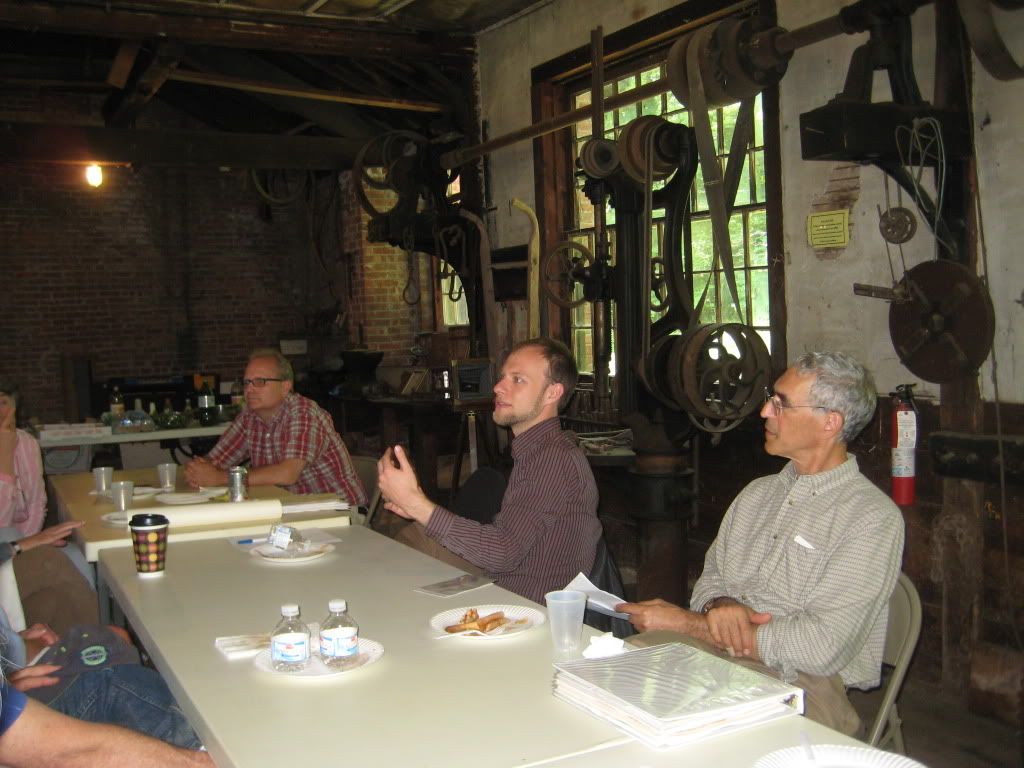
But first, a word about the inspiration for this contest. I am a proud member of Friends of the Taconic State Park and serve on the HistoryAdvisory Board.  At a recent meeting held at the Copake Iron Works Machine Shop, a room filled with  puzzling objects rich with the air of bygone eras, I was reminded of my own past.

I grew up in a rural area surrounded by relatives who were born at the end of the nineteenth or the beginning of the twentieth century.   I listened to their stories of ancient times with amazement and awe: kerosene lamps instead of electric bulbs, iceboxes instead of refrigerators, a world void of television, gas powered lawnmowers, and Polaroid film.  Perhaps because of this early education I developed a love of history and objects (Things!) that represent the past. By examining these objects we can get a glimpse of a vanished world and a deeper understanding of our own times. I hope this contest is fun for readers and will encourage you to look at everyday objects, learn what they are, and share your discoveries. I also hope that if you have items or stories associated with the Park and the Iron Works you will bring them to our attention (see below).

Clues have been woven into the introduction but here are a few more:

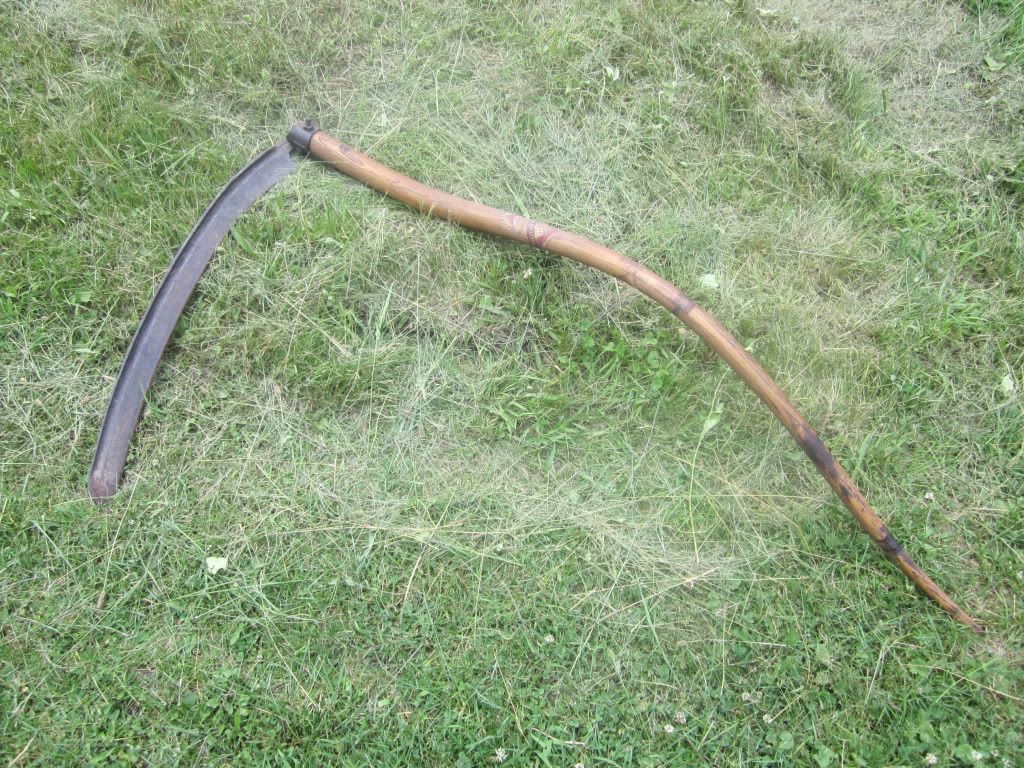
Photo 1 The Grim Reaper's Best Friend
Photo 1.  The photo’s background speaks to this Thing’s use. Bonus clue: This Thing is the Grim Reaper’s best friend.

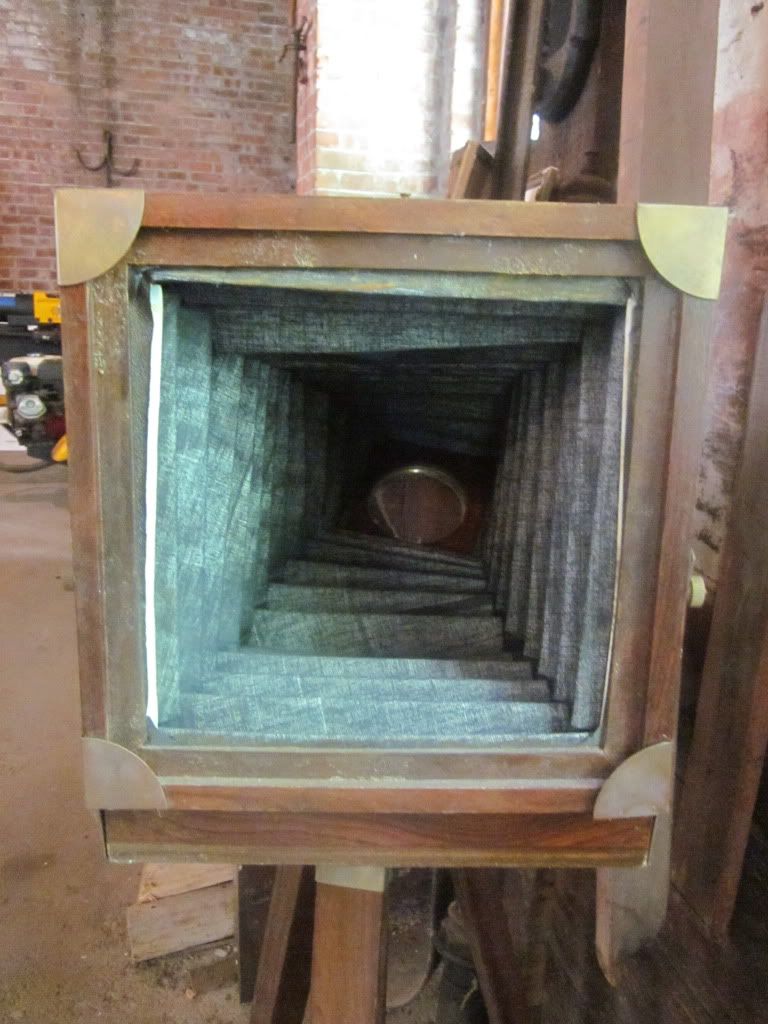
Photo 2 - A thousand words!
Photo 2. This Thing was capable of producing the equivalent of a thousand words.

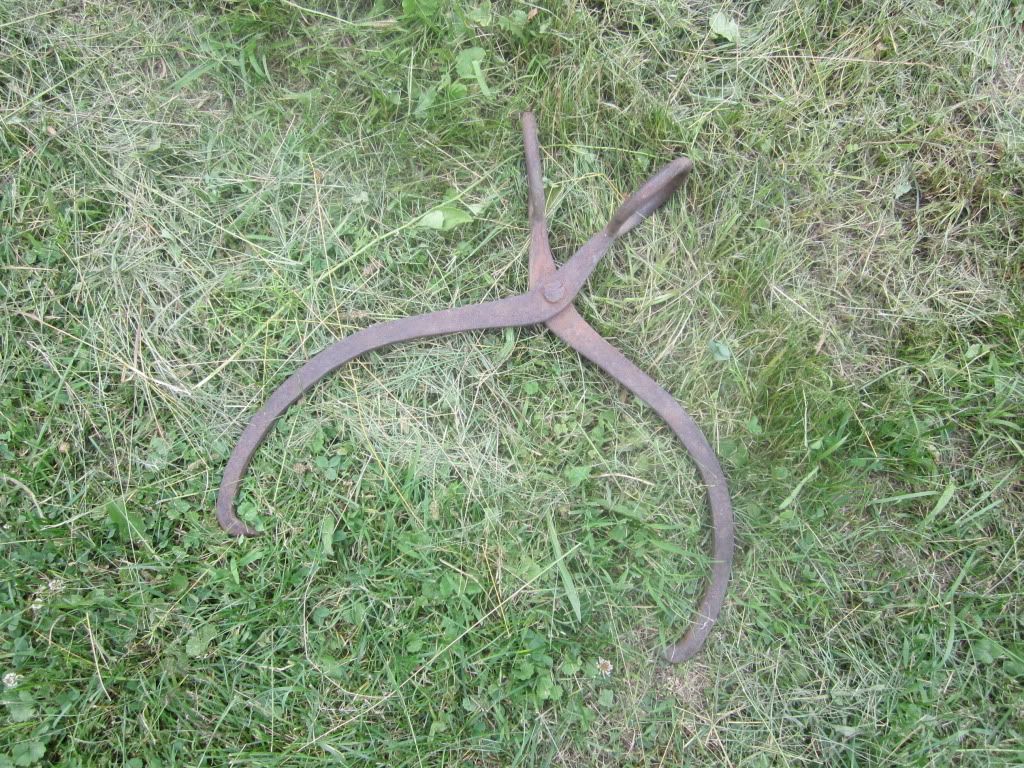
Photo 3 - Oh so cold!
Photo 3. If you think this Thing was used for logging you are very cold.

For the exciting conclusion to this contest including the answers and the name of the winner tune in next week to these pages.

But wait there’s more!  A Bonus Round! For a limited time only a second prize will be awarded to the person who writes the best description, provides historical information or anecdotes about the Park, delivers the most humorous answers or correctly corrects the author.  The bonus round prizewinner will be awarded a one-year Individual’s membership to Friends of the Taconic State Park. Since many of you are wisely already members, give the membership to a friend. In so doing your friend becomes a new Friend of the Friends of the Taconic State Park.

Report From the President


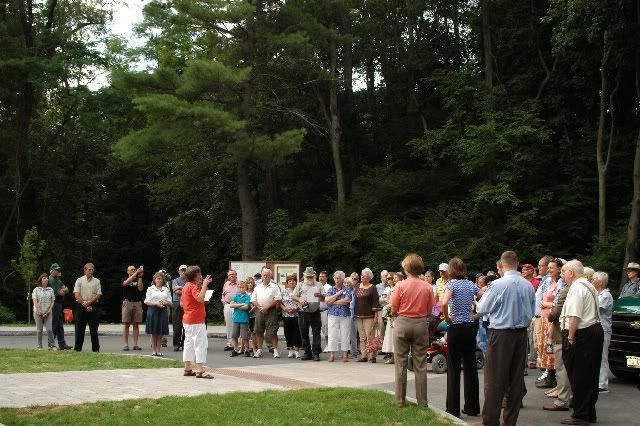
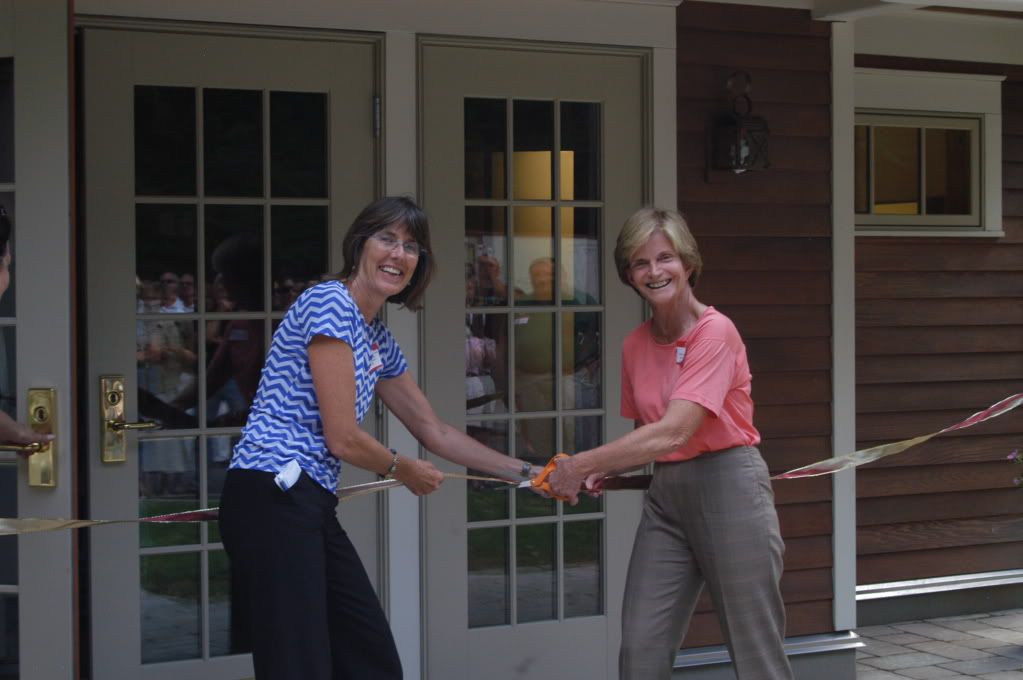
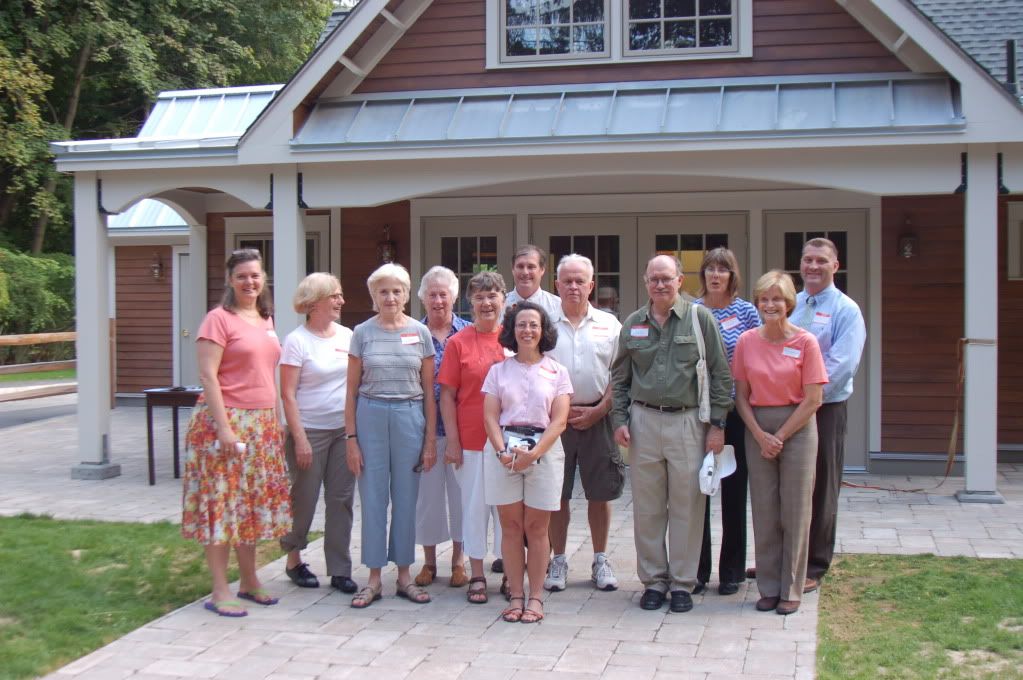
It was my great honor and pleasure to welcome a crowd of well-wishers on July 28th on the occasion of the dedication of the new Taconic State Park Visitor’s Center in Copake Falls during the Third Annual Meeting of Friends of Taconic State Park.  New York State Parks Commissioner Rose Harvey and New York State Council on Parks Chair Lucy R. Waletzky shared ribbon cutting duties with Leslie Wood, chairperson of  the Copake Economic Advisory Board.    Also present were Garrett Jobson and Ray Doherty from the Office of Parks’ Taconic Region.  Ray and Garrett thanked Dr. Waletzky for her generosity in making the new building possible, and unveiled a plaque dedicating a young sugar maple in her honor.  With the ringing of the old train bell, now mounted on the roof, the building doors were open for the public’s inspection and tour.
 
Margaret Roach
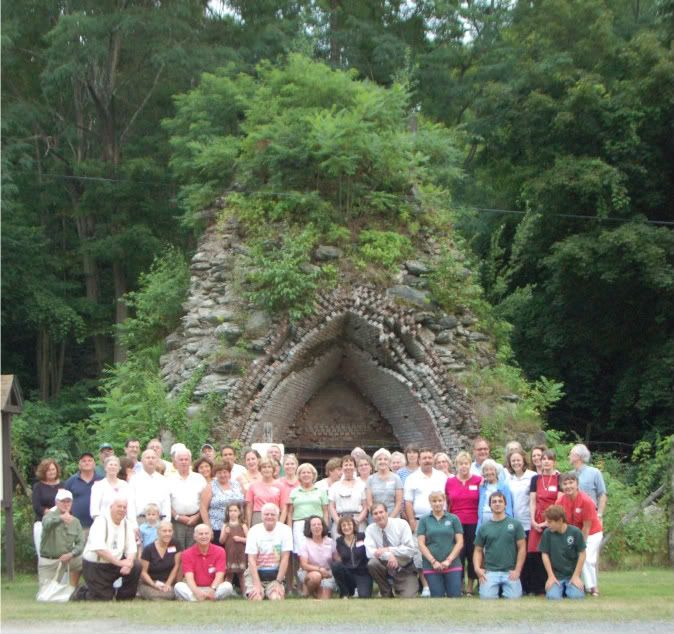
The guests then walked over to the Copake Iron Works for the business portion of the Annual Meeting as well as a delicious pot luck picnic.  At the meeting officers were elected for the coming year, and the by-laws were amended to allow for the expansion of the Board of Directors to eleven members.  New board members are Brian Boom and Louise Peterson, both long-time residents of Copake Falls and devoted friends of the Park.  Treasurer Deborah Cohen reported that we have raised $105,00 of the $147,000 needed to construct the protective cover over the old furnace, and Edgar Masters gave a brief report on the progress of the engineering status of the cover,  saying that he is hopeful that the footings for the uprights can be dug in the near future. Margaret Roach, who could be found flipping burgers and hot dogs for the assembled, was thanked for all her efforts on our behalf.  She will be presenting her popular slide lecture, “Nonstop Plants: The 365 Day Garden,” as a benefit for us on Saturday, August 20th (which also happens to be Copake Falls Day). 

The Friends group is thriving, with about  190 current members.  New members continue to join.  We encourage all of you “established” members to renew your membership.  Your continued support will make possible the restoration of the Copake Iron Works Historic District, an exciting restoration plan that will create economic, recreational and cultural benefits for all of us: neighbors and visitors, young and old, athletes and historians. 

With deepest gratitude for your interest and support,

Milbrey Zelley, President
Friends of Taconic State Park
Friends of Taconic State Park - July 28, 2011